
Dryer Repair Austin TXSame-Day Diagnosis & Upfront Pricing
A dryer that won’t heat isn’t just an inconvenience. It’s wet laundry piling up and a house full of clothes with nowhere to go. We show up, diagnose the actual problem, quote a flat price before any work starts, and in most cases have you running loads again the same day.
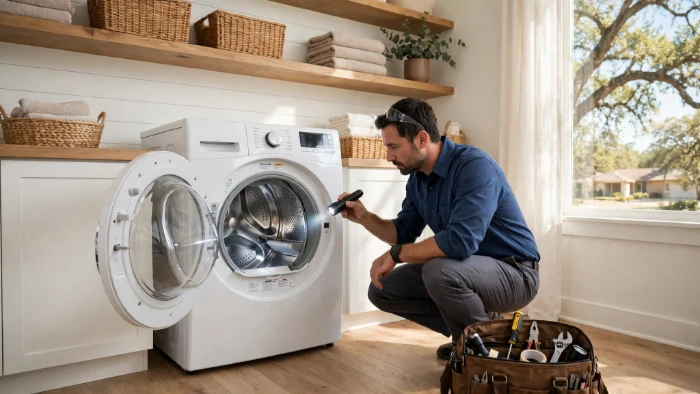
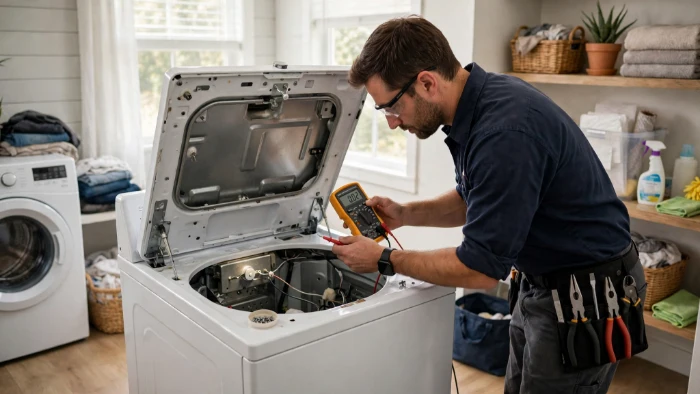
Dryer Repair Without the Guesswork
Dryer repair is what we do every day in Austin homes, from a machine that tumbles perfectly but produces no heat to a load that suddenly needs three cycles to dry.
Every visit follows the same order. We check the vent and airflow path first, find the actual fault, explain it in plain language, and quote a flat price before touching a screw. It’s the same approach we bring to all our appliance repair work across Austin.
- Clear Diagnosis
- Flat-Rate Pricing
- Gas & Electric Dryers
- Vent & Airflow Checked First
- Written Diagnostic Reports
- Same-Day Appointments
Dryer Brands We Service
We work on the brands Austin actually buys, in both gas and electric configurations.
- Whirlpool
- GE
- Samsung
- LG
- Maytag
- KitchenAid
- Electrolux
- Speed Queen
Gas dryer specialty work typically requires a certified gas-line-safe technician and may run slightly above the electric equivalent.
Why Austin Trusts Us With Their Dryers
Local, Not a
Call Center
When you call, you reach someone in Austin who knows the difference between a Cedar Park service window and a downtown one.
We Check the Vent,
Not Just the Machine
Most repair checklists jump straight to parts. Ours starts with airflow, because that’s the root cause more often than not in Austin’s housing stock.
Flat-Rate,
No-Surprise Pricing
The number we quote after diagnosis is the number on your invoice.
Gas & Electric,
Every Major Brand
Both configurations, across every brand listed above.
We Tell You
When Not to Repair
We’re not incentivized to run up a bill on a dryer that should be replaced.
Common Dryer Problems We Fix in Austin Homes
If your symptom is on this list, we’ve almost certainly seen it this week. For each one: what it usually means, what we check, and what you can safely check first.
Dryer Won’t Heat (Tumbles Fine, No Heat)
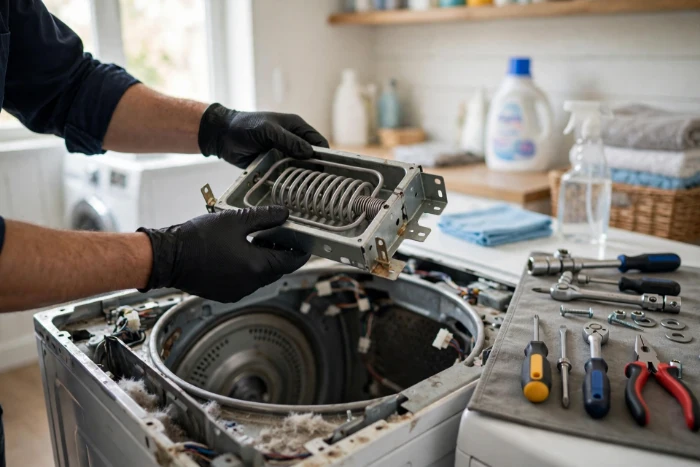
The drum turns, the timer counts down, and the load comes out cold and damp. This is one of the most common calls we get. The usual causes, in order: a burned-out heating element on an electric dryer, a failed igniter on a gas dryer, or a thermal fuse that has tripped — often because a clogged vent restricted airflow, overheated the cabinet, and the fuse did its job. We check the vent and airflow path before blaming the element — a good element produces no usable heat if a safety fuse keeps cutting it off. Your safe check: clean the lint screen and confirm the outside vent flap opens during a run. If airflow feels weak, stop and call — running it anyway just trips the next fuse.
Drum Not Turning
You press start and hear a hum, or nothing at all, and the drum sits still. Usually a broken or slipped drive belt; sometimes a failed motor or seized drum roller. Turn the drum by hand (dryer off): free movement points to the belt; resistance points to the motor or a bearing. On the visit we open the cabinet and inspect the belt, rollers, idler pulley and motor before quoting — a belt is a minor repair, a motor is a major one, and the honest advice differs. Your safe check: just note whether it hums — and don’t keep restarting it; a straining motor only gets worse.
Dryer Takes Multiple Cycles to Dry a Load
A load that used to take 40 minutes now takes over an hour, or needs a second full cycle. Almost always an airflow problem: a lint-clogged vent, a crushed or kinked exterior duct, or an under-cleaned lint screen. It’s the single most common issue we see tied to Austin’s longer vent-run housing stock, and it’s often fixable without replacing a single part. Left alone, though, it makes the heating element work harder, trips thermal fuses, and quietly raises your energy bill. Your safe check: hold your hand at the outside vent while it runs — airflow should feel strong and warm. Weak or cool air means the vent needs cleaning before any part gets blamed.
Dryer Won’t Start or Won’t Turn On
A dead panel, or a dryer that clicks but won’t run. Causes range from a tripped breaker or a door switch that isn’t registering as closed, to a failed start switch or a thermal fuse that has cut power as a safety measure. A hum without turning is usually different: a worn drive belt or a seized motor. On the visit we test power, door switch, start switch and fuse in that order, so we replace the part that actually failed. Your safe check: confirm the breaker hasn’t tripped and the door latches firmly. If the panel is still dead, it’s a call — there’s nothing else outside the machine to check safely.
Loud Squealing, Thumping or Grinding Noises
A squeal that starts with the drum usually points to worn drum support rollers or a glazed drive belt. Thumping — roughly once per revolution — is often a broken drum support roller letting the drum ride unevenly. Grinding can be a worn drum bearing or something caught in the blower wheel. These are wear-and-tear parts on any dryer — quick, affordable fixes when caught early. Left alone, a wobbling drum can damage the drum itself and turn a minor repair into a major one. Your safe check: run it empty for a minute. If the noise is still there, the machine needs a visit. Don’t ignore a new grinding noise — that’s metal on metal.
Burning Smell
Take this one seriously and don’t run another load. It’s often lint near the heating element — a real fire risk, worth an urgent same-day visit — or a belt slipping and generating friction heat. Occasionally it’s a motor overheating. On the visit we clean out the cabinet and vent path and don’t hand the machine back until the source is fixed — not just aired out. This is one of the few issues where we recommend not using the dryer again until it has been inspected, full stop. If it’s safe to reach, unplug the dryer, and call the same day.
Dryer Shuts Off Mid-Cycle
The dryer starts fine, then stops ten or twenty minutes in — sometimes with hot clothes, sometimes with an error code on the display. Usually it’s a thermal fuse or thermostat tripping because restricted airflow is overheating the system — vent and lint buildup, more often than component failure in Austin homes. It can also be an overheating motor cutting out, or a faulty moisture sensor ending automatic cycles early. During diagnosis we run it on a timed cycle to separate a sensor problem from a genuine overheat — the fixes are very different. Your safe check: try one timed cycle instead of an automatic one. If it still stops, stop using it and call — repeated overheating is hard on every part inside.
Dryer Error Codes We See in Austin Homes
Modern dryers report faults as short codes — these are the ones behind most of our Austin calls:
| Code | Brands | What it usually means | Worth a call? |
|---|---|---|---|
| d80 / d90 / d95 | LG | Exhaust restriction — the number is roughly how blocked the vent path is (80%, 90%, 95%) | Clean the lint filter and vent run first; if the code returns, call |
| AF | Whirlpool, Maytag | Low airflow — vent restriction | Same as above: vent path first |
| tE / tS | LG, Samsung | Temperature sensor (thermistor) fault | Yes — needs a technician |
| hE | Samsung | Heating error — dryer not heating correctly | Yes — element, igniter or thermal fuse |
| dF / dC | Samsung | Door fault — the dryer doesn’t detect the door as closed | Check the latch for lint or damage; if it persists, call |
| F01 | Whirlpool, Maytag | Main control board failure | Yes — needs a technician |
Austin note: many Austin homes have long vent runs — laundry rooms in the middle of the house, or on a second floor — so airflow codes (d80, AF) are the ones we clear most often here. A code that keeps coming back after cleaning usually means the vent run itself is crushed, too long, or full of lint deeper in the wall — not a faulty sensor. A code is a starting point, not a verdict: the same code can have two causes, so we test the part before replacing it.
Why Austin Dryers Fail Differently
This isn’t marketing copy. It’s the pattern we see call after call. Two things about how Austin homes are built and lived in shorten a dryer’s working life if nobody is watching for them.
Lint buildup, made worse by long vent runs
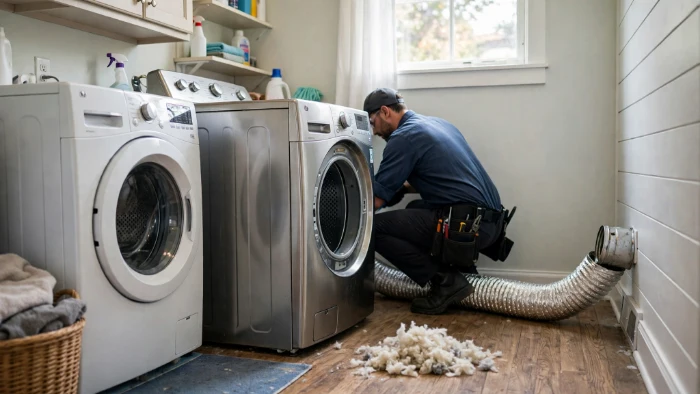
A lot of Austin housing stock, especially homes built or renovated in the last couple of decades in areas like Mueller, South Austin and the outer suburbs, routes dryer vents through longer duct runs than older, more compact homes. Longer runs collect more lint along the way, restricting airflow and forcing the element to work harder — one of the more common, and most preventable, causes of poor drying and dryer fires. If a load that used to take 40 minutes now takes over an hour, a lint-clogged vent is the first thing worth checking — before assuming the heating element has failed.
Garage and utility-closet installs running hotter longer
Most Austin dryers don’t sit in a climate-controlled room. Garages and small utility closets are common, and both run warmer here for longer stretches of the year than in milder climates. A dryer generating heat in a space that’s already hot five-plus months a year puts extra strain on thermostats, thermal fuses and heating elements — all temperature-sensitive by design. If your dryer lives in the garage, mention it when you call. It changes what we check first.
Put the two together and you get the local pattern: in a Texas summer the dryer is pushing hot air against 100-degree attic and garage heat, so airflow faults — blown thermal fuses, long dry times, airflow error codes — make up a bigger share of our Austin dryer calls than heating-element failures alone. We build every diagnosis around these two facts — checking the whole vent path on every visit, not just the part that failed — because a generic national franchise checklist doesn’t account for either one.
Our Simple Repair Process
Schedule Your Service
Call or book online for a convenient appointment.
Diagnose the Problem
A technician evaluates the machine and explains what is wrong.
Choose the Best Solution
We quote the flat repair price and help you make an informed decision.
Dryer Repair Austin TX: What It Costs
We quote flat-rate pricing after diagnosis. Not a phone guess, and not a number that changes once we’re in your laundry room.
Diagnostic Visit
Often waived if you proceed with the repair. Covers the visit and the time to identify the actual fault, not a guess.
Most Repairs
Vent cleaning, drive belt, thermal fuse, door switch, heating element, thermostat, igniter, motor or drum support, all quoted flat before any work starts.
| Service | Typical Cost Range |
|---|---|
| Diagnostic visit | $70–$129 (often waived if you proceed with the repair) |
| Minor repair | $100–$250: vent cleaning, drive belt, thermal fuse, door switch |
| Mid-range repair | $200–$300: heating element, thermostat, igniter |
| Major repair | $250–$400+: motor, drum support system |
| Gas dryer specialty repairs | Typically requires a certified gas-line-safe technician, and may run slightly above the electric equivalent |
What drives the price: the part itself, whether it’s on the truck or needs ordering, and labor time. We tell you the number before we start. You’re never signing a blank check.
Pricing last reviewed August 2026
Dryer Repair Across Austin & Nearby Areas
We repair dryers throughout Austin and the surrounding metro.
Frequently Asked Questions
1. How much does dryer repair cost in Austin?
2. Why is my dryer taking multiple cycles to dry clothes?
3. Is a burning smell from my dryer dangerous?
4. Why does my dryer keep shutting off mid-cycle?
5. What should I check before calling a dryer technician?
6. Is it worth repairing an old dryer?
7. Do you offer same-day dryer repair in Austin?
8. How long does a dryer repair usually take?
9. Do you repair both gas and electric dryers?
10. My gas dryer isn’t heating — is that dangerous, and who should I call?
11. Can you work directly with my property manager or Airbnb co-host?
Need Dryer Repair in Austin?
Call now or book online. We’re ready to help today! We also handle washer repair and refrigerator and freezer repair across Austin.
Serving Austin and the surrounding metro: East Austin, South Congress, Mueller, Hyde Park, Zilker, Travis Heights, Downtown, Cedar Park, Round Rock, and beyond.